Why many “from birth” car seats are not actually suitable for newborns
- Nov 22, 2025
- 4 min read
Updated: Mar 29
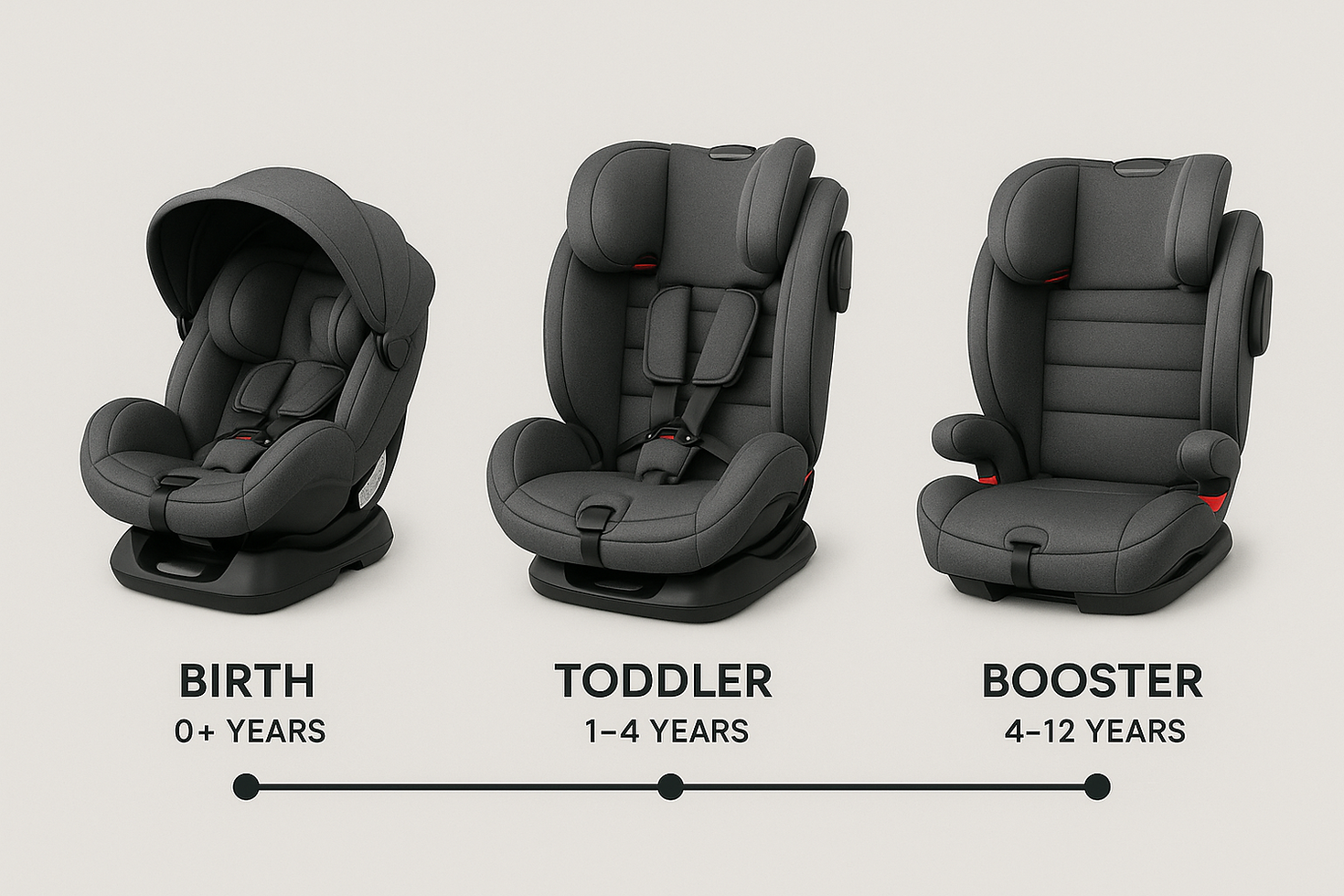
Choosing your baby’s first car seat can feel overwhelming. Every box seems to promise the earth, and it is easy to assume that a seat labelled “from birth” is genuinely suitable for a brand new newborn. Unfortunately, this is not always the case. Many toddler seats and multistage seats are legally allowed to say “from birth”, but that does not mean they can achieve a safe, realistic fit for a real newborn.
Here is why that matters.
The headrest does not go low enough
For a harness to protect your baby in a collision, the straps must start level with, or slightly below, the tops of their shoulders. This anchors them safely into the seat and prevents upward movement during impact.
In many seats advertised as suitable from birth, even the lowest headrest setting sits several centimetres above a true newborn’s shoulders. If the headrest cannot lower enough to meet the height of an actual newborn, the seat cannot provide a safe, biomechanically correct fit.

Newborn inserts cannot solve a too-high harness
Newborn inserts do play an important role. A well-designed insert should:
support a newborn’s posture and fill in gaps so they are not slumped
lift them slightly into a more natural, flatter position that keeps their airway clear
help the harness sit more securely against their body
make the seat softer and more comfortable for tiny babies
However, many inserts included with “from birth” multistage or toddler seats do not give enough elevation to meaningfully raise a newborn to the correct harness height. Some provide good postural support but only a tiny boost in seated height.
Even when an insert does lift the baby a little, it cannot overcome the main problem: in many seats, the lowest headrest and harness position is still too high. The baby’s shoulders remain below the strap level, meaning the harness starts above their shoulders. This is not safe for any rear-facing child. Inserts improve comfort and positioning, but they cannot fix a harness system that simply does not go low enough.
The crash test dummy problem
So why can these seats legally claim to be suitable from birth?
It comes down to the dummy used in R129 testing. The smallest dummy is the Q0, commonly referred to as a “newborn” dummy, but in reality it represents a 6 week old baby and measures 59.7 cm tall.
Most real newborns measure between 45 and 55 cm, and many do not reach 60 cm until 2 to 4 months old. This means the dummy used for approval is considerably larger than most babies parents imagine when they see “from birth” on the box. A seat can therefore pass testing and be legally advertised as suitable from birth, even though a real newborn will not achieve a safe fit until they are much bigger.

Are there seats that genuinely work from birth?
Yes. A small number of brands have invested time and research into creating seats that truly fit average or above-average sized newborns from day one. These seats use lower harness positions, improved newborn ergonomics, and geometry that supports a safe fit from birth.
However, if you are expecting a smaller baby or want the most predictable, reliable newborn fit, a dedicated infant carrier remains the safest choice.
So what should parents do?
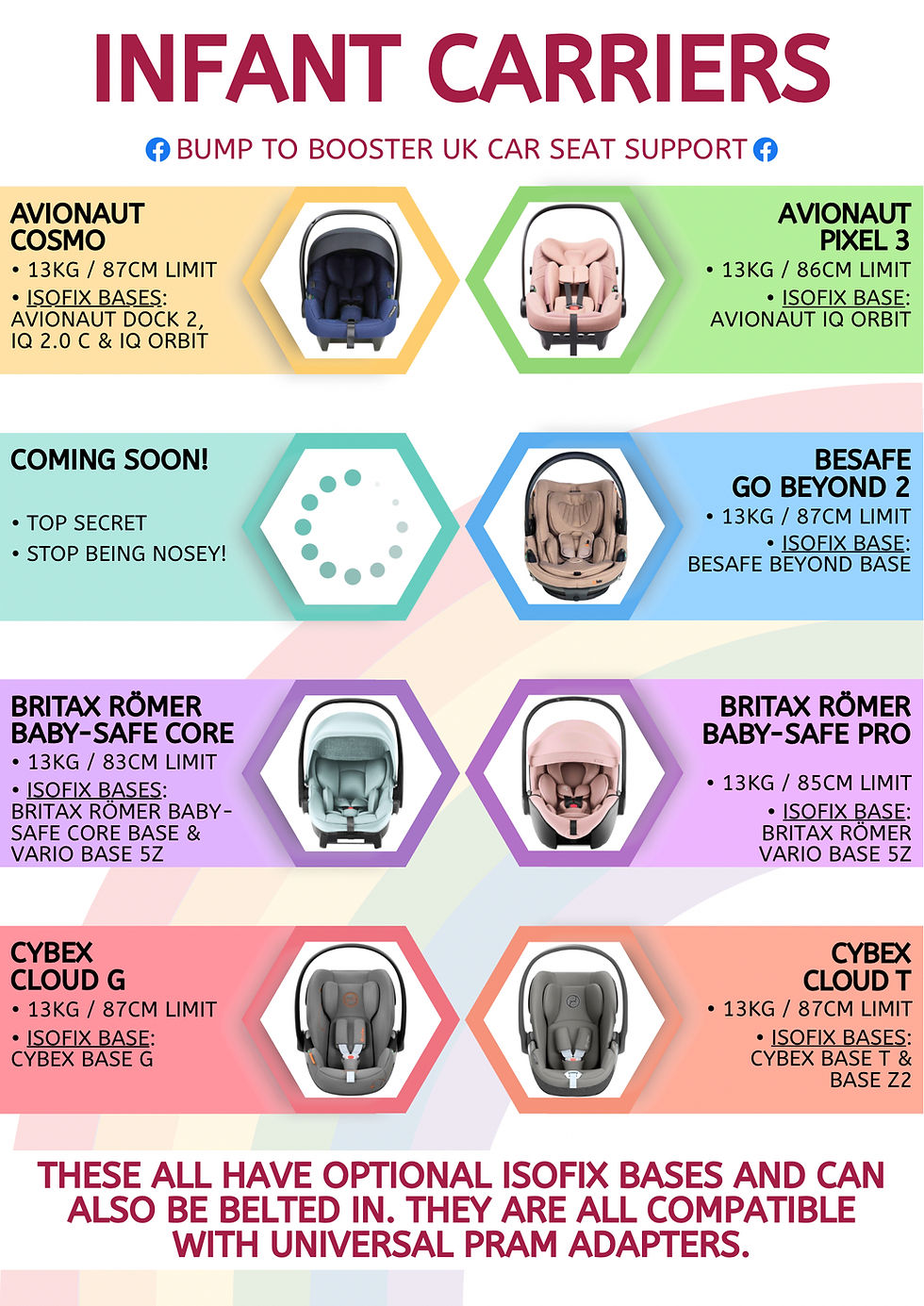
For most families, a dedicated infant carrier is the most dependable option for newborns. It offers the most consistent support, the lowest harness positions, and the highest likelihood of achieving a correct fit even for smaller babies.
There are a handful of well-designed multistage or modular seats that genuinely work from birth for average or larger newborns, but they are the exception, not the rule. If you are considering one of these seats, choose only from the small group known to achieve a realistic newborn fit, and wherever possible speak to a trained specialist before buying. This helps avoid buying twice or discovering on discharge day that the “from birth” seat does not safely fit your baby.

FAQs
Why do retailers still advertise these seats from birth?
Because the legal approval allows it. The label reflects the size of the crash test dummy, not the realistic size of actual newborns.
Can a newborn use a multistage seat if I buy extra padding?
No - you must never add anything to a car seat that is did not come with as it won’t have been crash tested with the seat. Inserts can improve posture and comfort but cannot fix a harness that starts too high above a newborn’s shoulders.
How do I know if a seat is truly suitable from birth?
You cannot reliably tell from packaging or marketing, and even specialists cannot guarantee a newborn fit before the baby arrives. Every newborn is a different height, weight and shape. Because of this uncertainty, the most dependable option is a dedicated infant carrier unless you are choosing from the very small group of seats proven to fit average or above-average newborns. This avoids the stressful situation of finding out at hospital discharge that the seat does not actually fit your baby.