
The Truth About Multi-stage Seats
Updated: Mar 10
Car seats that claim to take your child “from birth to 4, 7 or 12 years” sound like the dream. Fewer seats. Fewer purchases. Less faff. But while multistage seats promise longevity, convenience, and savings, the reality often falls short.
These seats may seem like a smart investment, but they tend to compromise on fit, support, and safety - especially at the earliest and latest stages of use.
Newborns Need More Than Marketing
Despite being advertised as suitable from birth, most multistage seats don’t offer the proper fit or support for newborns. The headrest and harness often can’t be lowered enough to sit level or just below baby’s shoulders, and the inserts rarely provide enough lift. This leaves newborns slumped and “lost” in the seat - which can affect both safety and breathing.
In truth, most babies don’t get a safe fit in these seats until around 4-6 months old. Until then, a well-fitting infant carrier is the safest choice.
One Seat, Three Stages - Three Compromises
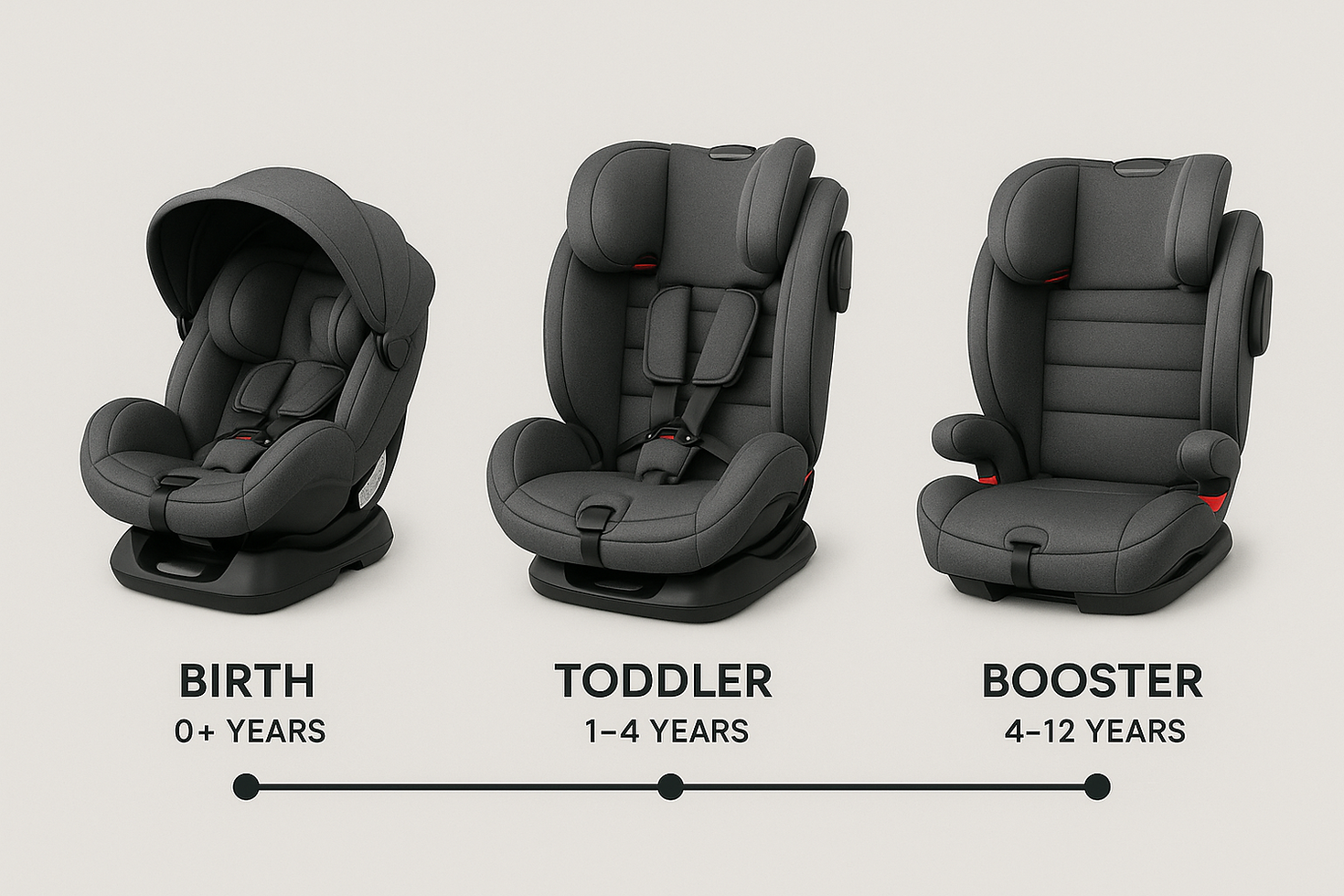
Multistage seats are designed to rear-face an infant, then a toddler, and finally convert to a high backed booster. But trying to serve all three stages often means some serious trade-offs:
Fit and comfort are rarely ideal at any one stags
Harness limits are often short - typically 18kg or 105cm (sometimes less!)
Booster mode often doesn’t offer optimum belt positioning
Headrests can hit the vehicle roofline before reaching their full height as the child seat itself is sat very high up
Dedicated seats, on the other hand, are designed with one stage in mind - meaning better side impact protection, belt routing, and posture support.

Safety vs Shelf Life
A seat that lasts 10+ years sounds great in theory, but long-term use comes with its own safety concerns:
Harnesses, padding, and internal mechanisms wear over time
Newer safety features may not be present in older seats
Safety regulations evolve - your seat may not meet the latest standards by the time your child is 10
And let’s not forget that kids aren’t always gentle with their gear. A seat in daily use for a decade is likely to show signs of fatigue.
Booster Mode Limitations
Many multistage seats offer booster use up to 135cm or 150cm. But not all children get a proper belt fit in those seats, even if the stated limit is 150cm. Some designs simply have shells that are too short, while some also sit very high up on ISOFIX rotational bases which makes it almost impossible to fully extend the headrest to it’s potential limit - especially in vehicles with sloped or low ceilings.
It’s worth remembering that while the legal minimum in the UK is 135cm or 12 years, it’s safest to continue using a high-backed booster until 150cm.
Are there any good multistage seats?
Yes - there are a handful of excellent seats that last from birth upwards that are true to their word.
These seats are designed from the ground up to meet the safety and developmental needs of children across multiple stages - without cutting corners. Here’s what sets them apart:
Proper newborn fit: Unlike many multistage seats, these models include well-designed modular inserts and low harness slots that offer a genuinely safe, snug fit for average+ sized newborns (supporting the head, hips, and airway).
Extended rear-facing capacity: They allow for rear-facing up to 105cm/18kg (BeSafe iZi Twist B), 125cm/25kg (Sky 2.0), 125cm/23kg (Axkid One+3) and 125cm/28kg (Axkid Minikid Core) - exceeding legal minimums and supporting rear-facing through the most vulnerable early years.
Rear-facing only design (in most cases): Models like these are dedicated rear-facing seats, meaning no compromises are made to accommodate forward-facing features.
Enhanced safety engineering: These seats often pass additional independent testing (e.g. Swedish Plus Test), use high-quality energy-absorbing materials, and are built for long-term use without degrading in comfort or structural integrity.
In short: they’re multistage seats done properly, engineered for safety first - not just extended marketing claims.
Final Thoughts
Multistage seats can be a reasonable option in some situations - but most aren’t the cost-saving unicorn they seem. Often, separate seats for each stage offer:
Better support and fit
Improved crash performance
Easier installation and use
A similar or lower total cost when spread over the years

FAQs
Are multistage seats unsafe?
Not inherently - many pass legal crash testing. But they often lack the advanced safety features and stage-specific design seen in dedicated seats.
What’s the best alternative?
A supportive infant carrier/from birth+ seat, followed by a good extended rear-facing toddler seat, then a high-backed booster up to 150cm. If baby is expected to be on the smaller side, it would always be advisable to use an infant carrier in those crucial early days.
Do I have to replace a multistage seat after a few years?
You might. Wear, crash standards, or poor fit can mean replacing it anyway - despite its advertised lifespan. All car seats have a recommended use period too.


